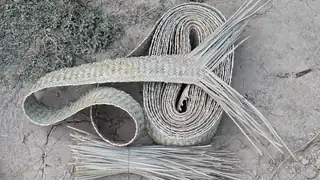
Customers are asking for eco friendly mats. Eco stores, gift shops, resorts, yoga studios and online sellers tell us their buyers want floor mats without plastic, made from natural fibre, with a story behind them. But “eco friendly” covers many materials, and each has strengths and weaknesses. If you stock the wrong one for your customers, or describe it wrongly, you get returns and complaints.
I am Gokul from Ramnad Agro in MPK Valasai, Ramanathapuram. We supply handwoven palm leaf mats wholesale, so we have an interest in this question. I will still be fair about where other materials do better, because a buyer who stocks the right mat for the right use reorders.
There is no official single test that a shop can apply to call a mat environmentally friendly. In practice, buyers and shoppers usually look at a few plain questions:
What is it made of? Plant fibre or plastic?
How is it made? By hand or by machine, with or without dyes and finishes?
How long does it last in use? A mat that wears out quickly and is replaced often is not a good choice either.
What happens at the end? Does it break down as plant material, or stay as plastic waste?
No material wins on every question. That is why the honest approach is to compare them for the use you have in mind.
02
The four common floor mat types
Palm leaf mat (panai olai paai)
Woven by hand from strips of sun-dried palmyra leaf. Our mats use unbleached leaf with no plastic and no chemical dyes, with folded, double-woven edges. Thin, firm and light: a 6×3 ft mat weighs about 1.2–1.8 kg. Traditionally used for sleeping, sitting, dining and pooja in South Indian homes. Our article on palm leaf mat weaving explains how they are made.
Grass mat (korai paai)
Woven from sedge grass, often on a loom, in plain or coloured patterns, from fine to coarse. A natural fibre mat with its own following and a different feel and price level. We do not repeat the comparison here; read our palm leaf mat vs korai mat guide for the details.
Jute mat or rug
Made from jute fibre, usually woven or braided into rugs, runners and doormats. Softer underfoot and popular in home décor. Jute is a plant fibre, but it tends to absorb moisture and can stain, so it is best kept indoors in dry spaces. Some jute products have backings or blends; check what you are buying.
Plastic mat (PP mat)
Woven from polypropylene strips by machine, in bright colours and patterns. Light, cheap to make, very uniform, easy to wipe or wash, and handles water and spills well. It is plastic, and at the end of its life it stays as plastic waste unless it is collected.
03
Eco friendly mats compared
Factor
Palm leaf
Plastic (PP)
Jute
Korai grass
Material
Palmyra leaf, plant fibre
Polypropylene, plastic
Jute, plant fibre
Sedge grass, plant fibre
Feel
Firm, dry, natural texture
Smooth, can feel slippery or sweaty
Softer, can feel coarse barefoot
Smooth to fine, depending on weave
Airflow in hot weather
Good; does not trap heat
Can feel warm and sticky
Moderate
Good
Water and spills
Poor; must be dried quickly
Very good; wipe or wash
Poor; absorbs and stains
Fair; must be dried
Durability in use
Good with care; edges wear with rough use
Good; can crack or fade in strong sun
Good indoors; frays at edges
Good with care
Care
Keep dry, roll, air
Wash and dry
Vacuum or shake; keep dry
Keep dry, roll, air
End of life
Breaks down as plant material
Plastic waste
Breaks down if no synthetic backing
Breaks down as plant material
Who usually buys
Traditional homes, pooja buyers, resorts, yoga and eco stores
Budget buyers, events, outdoor and wet areas
Home-décor buyers, city homes
Traditional and gift buyers
The table shows a simple pattern. Plastic mats are hard to beat where water is involved. Natural mats are preferred where people sit or lie on the mat for long periods in warm weather, and where the look and the story matter.
04
The honest weaknesses of palm leaf mats
If you stock palm leaf mats, tell your customers about these points up front. It prevents most complaints.
Moisture. Palm leaf does not like water. Spills should be wiped and the mat dried before rolling. It is not a bathroom or wet-area mat.
Mould if stored damp. A mat rolled while damp, sealed in plastic or kept on a damp floor can develop dark spots and a musty smell. This is the most common problem we hear about, and it is almost always a storage issue.
Edge wear. Edges wear first with rough use, footwear, dragging or repeated folding. Roll the mat; do not fold it.
Not cushioned. It is thin and firm. Customers expecting a soft foam mat will be disappointed.
Natural variation. Sizes are approximate, and colour, thickness and edge finish vary slightly from mat to mat.
A natural floor mat for sleeping: what to tell customers
Many shoppers search for a natural floor mat for sleeping. The palm leaf mat has been used this way in South Indian homes for generations: rolled out at night on a clean, dry floor and rolled away in the morning. Many people like it in hot weather because it feels dry rather than sticky. Tell customers it is thin and firm, not cushioned, and that some people use a cotton sheet or thin mattress on top. Do not make claims about sleep, posture or health; they are not needed, and you cannot prove them.
07
How to market a natural mat honestly
Green claims attract buyers, and they also attract complaints when they are vague or untrue. India’s consumer protection authority has issued guidelines on environmental claims, and marketplaces have their own rules. Read the current guidelines and the policies of every platform you sell on. The safest approach is simple: say only what you know is true about the product in your hands.
Say this (true for our mats)
Avoid this
Handwoven from natural palmyra leaf
“100% eco” or “completely green” with no explanation
No plastic; no chemical dyes
“Chemical-free” as a blanket claim about everything
Plant material that breaks down at the end of its life
Specific claims about days to decompose or carbon saved
Traditional South Indian floor and sleeping mat
Any health, sleep or medical claim
Made by village weavers in Ramanathapuram district
Claims about the makers you cannot check
Keep dry; roll, do not fold
“Lasts forever” or “waterproof”
Use real photos of the mats you sell, show two or three mats side by side so variation is visible, and put the care instructions on the tag. A customer who knows to keep the mat dry is a customer who comes back.
08
Checklist before you stock natural mats
Natural mats sell well when the shop is set up for them. Before your first order, run through this list.
Know your customer’s use. Sitting, sleeping, pooja, dining or décor? Palm leaf suits dry indoor use; a wet verandah or bathroom needs a different mat.
Check a sample. Unroll it, check the weave and edges, smell it for damp, and measure it. Our weaving guide has a full quality checklist.
Prepare dry storage. A rack off the floor in a ventilated spot, away from walls that get damp in the rains.
Plan your display. Show one mat unrolled so customers can feel it, and keep the rest rolled and tied. Do not stack heavy goods on rolled mats.
Write a shelf tag. Material, approximate size, “handwoven, natural variation is normal”, and “keep dry, roll, do not fold”.
Order to your selling pace. Start at the minimum, watch sales for a few weeks, and reorder. Smaller, more frequent orders keep stock fresh, especially in humid months.
Train your staff. A one-line answer to “is this plastic?” and “how do I clean it?” closes most sales at the counter.
If mats are only part of your range, many natural-product shops also stock coconut leaf brooms and palmyra fibre rope, which can be added to the same pickup. Our palmyra tree uses article explains where each of these products comes from, which is useful material for your shelf tags and product pages.
09
How to order palm leaf mats from Ramnad Agro
We supply two standard sizes, about 6×3 ft and about 4×2 ft, plus custom sizes for bulk orders on request. Mats are packed in bundles of 25, compressed and wrapped in gunny or hessian, and the minimum order is 50 mats. See our sizes, packing and MOQ guide for more.
Enquire with sizes and quantity through the quote form or WhatsApp.
Pay 50% advance to book. Stock orders of 50–300 mats are usually ready in about 3 business days.
Book your own transport and a loading slot on our pickup booking form. We sell ex-godown only.
Pay the balance before loading. We pack and load free at MPK Valasai, 6 AM to 8 PM, seven days a week. Directions are on the Delivery & Pickup page.
Stock a natural mat you can describe honestly
Handwoven palm leaf mats from Ramanathapuram: no plastic, no chemical dyes, bundles of 25. Send your sizes and quantity for the current rate.
There is no single answer. Mats made from plant fibres such as palm leaf, grass or jute avoid plastic and break down as plant material at the end of their life. Which one suits you depends on how the mat will be used, the climate, and how it will be cared for. Palm leaf mats are woven by hand with no plastic and, in our case, no chemical dyes.
Is a palm leaf mat better than a plastic mat?
For sitting and sleeping in hot weather, many people prefer the dry, natural feel of palm leaf. A plastic (PP) mat is easier to wash, handles water better and is usually more uniform. A palm leaf mat is plant material with no plastic. Each has strengths; stock both if your customers ask for both.
Can a natural floor mat be used for sleeping?
Yes. The panai olai paai has long been used as a sleeping mat in South Indian homes, usually rolled out on the floor at night and rolled away in the morning. It is thin and firm, not cushioned. We make no health claims for the mats.
What are the weaknesses of palm leaf mats?
They do not like water or damp. A mat left wet or stored in a damp place can get mould spots and a musty smell. Edges wear with rough use, footwear or repeated folding. They also vary slightly in size and colour because they are handmade.
How should I describe a palm leaf mat as eco friendly without overclaiming?
Stick to facts you can stand behind: handwoven from natural palmyra leaf, no plastic, no chemical dyes, plant material that breaks down at the end of its life. Avoid vague words like “100% eco” or claims about carbon or health that you cannot prove.
What is the minimum order for palm leaf mats?
50 mats, which is two bundles of 25. You can mix 6×3 ft and 4×2 ft sizes. We sell ex-godown: you arrange the transport and we pack and load free at MPK Valasai.
Buying palm leaf mats in bulk for a resort, homestay or yoga centre? Sizes, uses, care, replacement planning and how to order and collect from the godown.
Need today's wholesale price?
Send the product, quantity and your city. We reply with the price at our godown, usually the same day. You arrange the transport; we pack and load it free.