
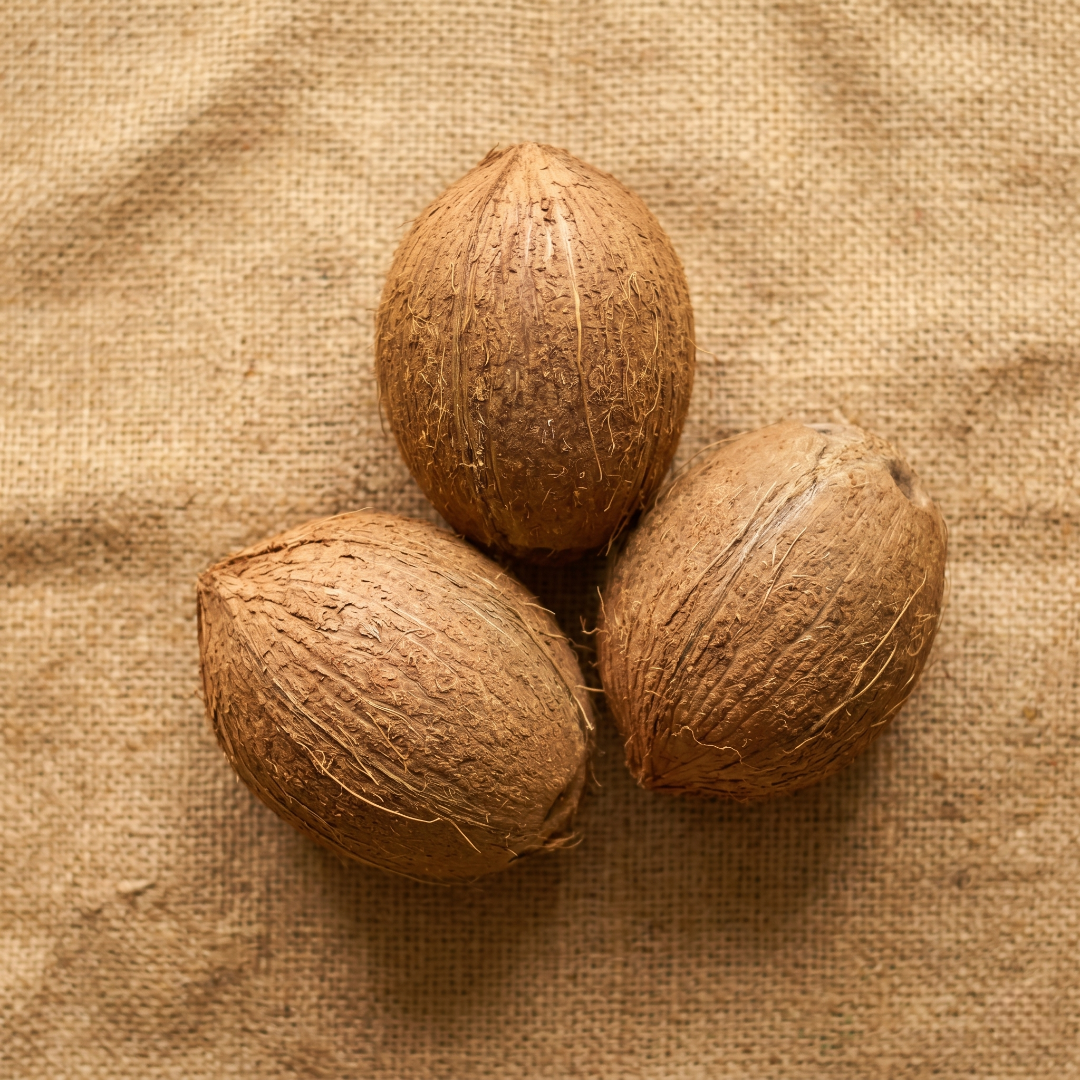
If you're a retailer stocking coconut oil for your shop, or a manufacturer who uses it as a raw ingredient, here's an uncomfortable truth: a large portion of "cold-pressed coconut oil" sold in Tamil Nadu retail markets is not what the label claims. Most is either refined oil rebranded, mixed with cheaper palm oil or paraffin, or processed with heat and chemicals far above what cold-press means.
At Ramnad Agro we don't sell coconut oil directly — but we supply the coconuts to oil mills that produce it, and over twenty-five years of being in this trade has taught us how to spot the real thing. This guide hands those tests over to you.
What "cold-pressed" actually means
True cold-pressed coconut oil is extracted from dried coconut copra at temperatures typically below 50°C, using mechanical pressure only. No solvents, no chemical bleaching, no deodorising agents. The oil retains the natural fragrance of coconut, its lauric acid content, and a slight golden tint when liquid.
If any of those four things — temperature, mechanical-only extraction, no chemicals, no bleaching — is violated, the oil is not cold-pressed. It might still be coconut oil, but at a different price point and quality level.
Test 1: The fridge test
This is the simplest and most reliable test you can do at home. Pour a small amount of oil into a clean glass and place it in the refrigerator for 30–45 minutes.
- Pure cold-pressed coconut oil will solidify completely into a uniform white mass.
- Adulterated oil (mixed with palm oil, paraffin, or mineral oil) will solidify partially — you'll see two distinct layers, or it won't fully solidify at all.
- Refined coconut oil will solidify but with a slightly different texture — denser, sometimes slightly yellowish.
This single test catches around 70% of common adulteration. Do it before you buy from any new supplier in bulk.
Test 2: The smell and taste
Real cold-pressed coconut oil smells like coconut — distinctly, naturally, with no harshness. If the oil smells faintly chemical, soapy, or like nothing at all, it has been deodorised (a giveaway of refining).
Taste a small drop. Pure cold-pressed has a mild, sweet, nutty coconut flavour. Refined oil tastes neutral or slightly metallic. Palm-mixed oil has a heavier, slightly waxy mouthfeel.
Test 3: The water test
Take a glass of water at room temperature. Add a teaspoon of the oil. Pure cold-pressed coconut oil will float on top in a single clean layer and the water below will remain perfectly clear. If the oil starts to disperse, cloud the water, or leave residue floating mid-glass, something has been added to it.
Test 4: The freeze and thaw cycle
Solidify the oil in the fridge as in Test 1. Then let it return to room temperature naturally. Pure coconut oil will return to a clear, golden-tinted liquid with no separation. Adulterated samples often show a thin oily film on top or sediment at the bottom after thawing — that's the marker of mixed oils with different melting points.
Test 5: Ask for the chakku (mill) and the copra source
This isn't a chemistry test — it's a supply-chain test, and it's the most important one for bulk buyers.
Genuine cold-pressed coconut oil comes from a specific mill that uses a specific kind of press (in Tamil Nadu, the traditional chekku or modern rotary cold-press). Ask your supplier:
- Which mill processes your oil?
- Where does the copra (dried coconut) come from?
- Can I visit the mill or see the press in operation?
A supplier who can answer these three questions clearly — and welcomes a visit — is almost certainly genuine. A supplier who deflects, gives vague answers, or refuses access is selling you something else.
Why this matters for your business
If you're reselling coconut oil to end customers, getting caught selling adulterated oil destroys customer trust permanently. If you're using it in food manufacturing, mixed oils change your final product's behaviour during cooking and storage. And if you're paying cold-pressed prices for refined oil, you're losing 30–40% margin to your supplier's deception.
The five tests above take less than an hour combined. The cost of skipping them can be felt for years.